

.svg)

.svg)
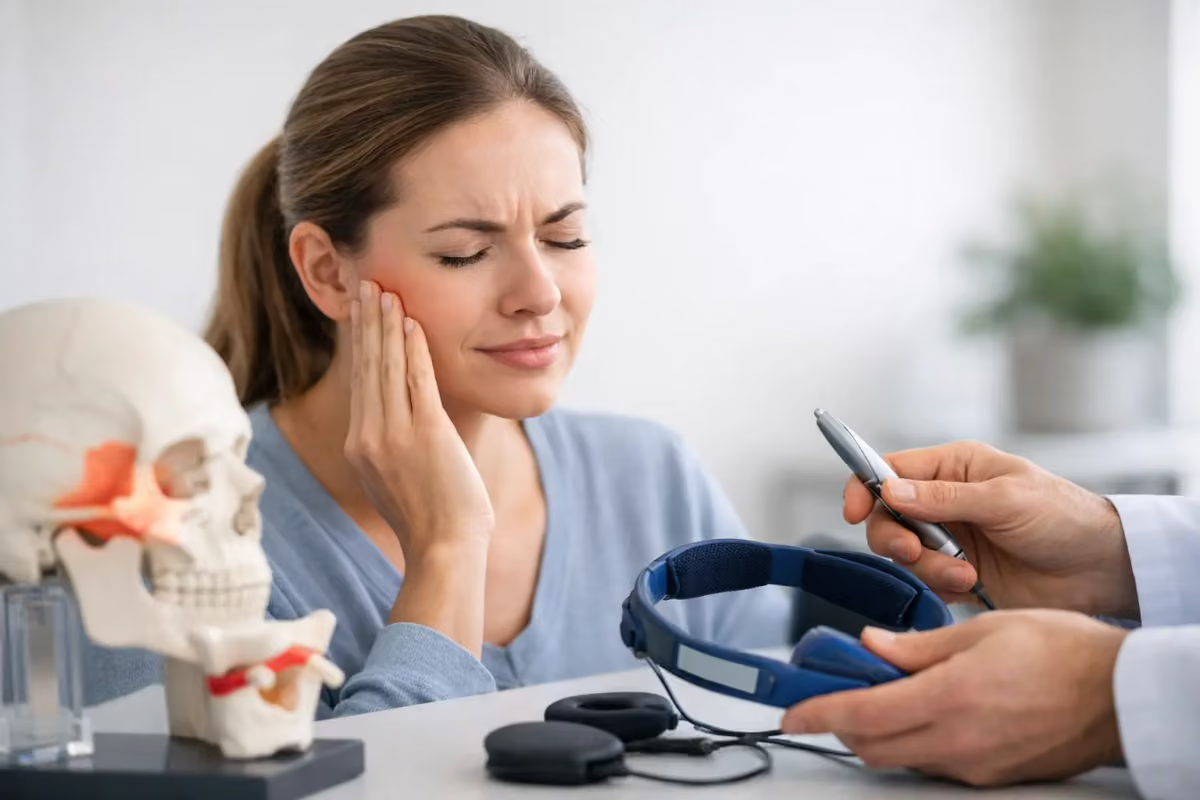
TMJ Treatment Without Surgery: What Works
Jaw pain rarely stays in the jaw. It shows up when you wake up with a headache, when your ear feels full for no clear reason, when chewing becomes tiring, or when your neck and face stay tense all day. For many patients, the first question is straightforward: Is there real TMJ treatment without surgery that can actually help? In many cases, yes - but the right answer depends on why the joint and surrounding muscles are irritated in the first place.
TMJ disorders are not one-size-fits-all. The temporomandibular joints connect your jaw to your skull, and they work alongside muscles, ligaments, teeth, bite patterns, airway function, and even sleep habits. That is why quick fixes often fall short. If treatment is going to last, it has to address the source of the problem.
When TMJ Symptoms Point to a Bigger Issue
People often assume TMJ means jaw clicking. Sometimes it does. But many patients seek help for symptoms that do not seem dental or joint-related at all. Facial pain, temple pressure, frequent headaches, neck tightness, ear ringing, ear fullness, and pain with chewing can all be tied to TMJ dysfunction.
Stress and clenching are common drivers, but they are not the whole story. A misaligned bite, inflamed jaw muscles, poor sleep, airway problems, prior injury, and chronic grinding at night can all overload the joint. In some cases, sinus pressure and TMJ discomfort can overlap, which is one reason accurate diagnosis matters. If you treat the wrong source, the pain keeps coming back.
TMJ Treatment without Surgery Starts with a Diagnosis
The most effective nonsurgical care begins with a detailed evaluation, not a generic mouthguard handed over after a brief visit. A specialist should look at how your jaw opens and closes, whether the joint clicks or shifts, where the muscles are tender, and whether your symptoms connect to headaches, ear complaints, neck pain, or sleep-disrupted breathing.
This matters because multiple patients can all say, My jaw hurts, and need very different treatment. One may have muscle-driven pain from nighttime clenching. Another may have joint inflammation with restricted motion. A third may have airway-related grinding that gets worse because the body is struggling to breathe well during sleep. Those differences change the treatment plan.
At a specialty practice like Exhale Sinus, TMJ, Headache & Sleep Specialists, that whole-picture approach is especially important because TMJ pain often overlaps with headache, ear, airway, and sleep symptoms. Looking at those connections can save patients from months of treatment that only address part of the problem.
What Conservative TMJ Care Usually Includes
For many adults, TMJ treatment without surgery involves a combination of therapies rather than a single fix. The goal is to calm irritation, reduce strain on the joint, and prevent the behaviors or structural issues that keep aggravating it.
Custom oral appliances are one of the most common options. These devices are not interchangeable with over-the-counter guards. A properly designed appliance can reduce pressure on the joint, limit grinding damage, and support a healthier jaw position during sleep. The exact design matters. In some patients, the wrong appliance can worsen symptoms, which is why customization and follow-up are so important.
Muscle-focused treatment is also common, especially when clenching, facial tightness, and tension headaches are part of the picture. This may include targeted therapy for overactive jaw muscles, strategies to reduce daytime clenching, and guidance on avoiding repetitive strain. Patients are often surprised by how often they hold their jaw tense at the computer, in traffic, or during stressful moments.
Anti-inflammatory care can help when the joint is irritated, but medication alone is rarely the full answer. Short-term support may reduce pain enough for the joint to settle, yet lasting relief usually comes from correcting what is causing the inflammation in the first place.
Physical therapy can be useful as well, particularly for limited jaw opening, muscle imbalance, and neck involvement. Gentle exercises, posture correction, soft tissue work, and movement retraining may all help. This is another area where precision matters. Aggressive stretching in an already inflamed joint may not be appropriate, while guided therapy at the right stage can improve function.
Bite, Airway, and Sleep Can Affect Your Jaw
One of the most overlooked parts of nonsurgical TMJ care is what happens at night. If you grind your teeth, wake with jaw soreness, or feel exhausted despite a full night in bed, the problem may be more than stress.
Sleep-disordered breathing can contribute to clenching and grinding. When breathing is disrupted during sleep, the body may tense the jaw and surrounding muscles as part of an effort to stabilize the airway. That means the joint never gets a real chance to rest. In these cases, treating the jaw alone may bring only partial relief.
That does not mean every TMJ patient has a sleep disorder. It does mean persistent cases deserve a broader look. If TMJ pain shows up alongside snoring, poor sleep, morning headaches, dry mouth, or daytime fatigue, a more integrated evaluation can be valuable. The same is true when ear pressure, tinnitus, or chronic headaches travel with jaw symptoms.
How Long Does TMJ Treatment without Surgery Take?
This depends on the cause, the severity of the inflammation, and how long the problem has been going on. Some patients feel noticeable improvement within weeks once the right appliance or therapy is in place. Others need a longer course, especially if muscle patterns, nighttime grinding, or overlapping headache and sleep issues have been building for years.
The honest answer is that progress is not always linear. Symptoms often flare after periods of stress, poor sleep, or heavy chewing. That does not mean treatment is failing. It may mean the plan needs adjustment, the appliance needs refinement, or another driver has not been fully addressed yet.
A good treatment plan should include follow-up, reassessment, and room to adapt. TMJ disorders can change over time, and care should be responsive enough to change with them.
When Surgery is Not the First Step
Many patients worry that joint pain automatically leads to a procedure. In reality, surgery is usually reserved for specific situations, such as severe structural damage, significant joint disease, trauma, or cases that have not improved despite well-managed conservative care.
For the majority of patients, starting with nonsurgical treatment is appropriate and often effective. That approach carries less risk, allows the provider to learn how your symptoms behave over time, and can resolve pain without exposing you to a procedure you may not need.
There are trade-offs, of course. Conservative care requires patience. It may involve wearing an appliance consistently, changing daily habits, attending therapy, or addressing related sleep issues. But for many people, that is a worthwhile path if it means reducing pain and improving function without surgery.
Signs it is Time to Seek Specialist Care
If your jaw pain has become part of daily life, it is time to stop guessing. The same applies if you have recurrent headaches, ear fullness, facial tension, jaw popping with pain, limited opening, or symptoms that keep returning after temporary fixes.
You should also consider a specialist evaluation if you have already tried a night guard, dental care, or medication and still do not feel better. Persistent symptoms often mean the diagnosis is incomplete, not that you simply have to live with the problem. The best TMJ care is not about chasing symptoms one at a time. It is about understanding how the jaw, muscles, airway, sleep, head, neck, and ears may be working together - or working against each other.
Relief is possible, and it often starts with a clear explanation of what is really driving your pain. If your symptoms have been dismissed, minimized, or treated in pieces, a more targeted, nonsurgical plan may be the step that finally moves things forward.
Disclaimer: The content provided in this article is for informational purposes only and is not intended to diagnose, treat, cure, or prevent any medical condition. Treatment decisions should be made in consultation with a licensed healthcare provider who can evaluate your individual circumstances.